Blog
How Much Does Water Damage Restoration Cost? A Practical Look at Pricing
Water damage restoration pricing isn’t guesswork, but it often feels that way from the outside. Some homeowners hear stories of quick, inexpensive fixes, while others end up dealing with multi-thousand-dollar projects that seem to come out of nowhere. The truth is simpler: water behaves differently in every home, and because of that, the cost of restoring a property never follows a single pattern.
Instead of giving vague averages, this blog breaks down how pricing is formed, why certain homes cost more to restore than others, and what Anaheim residents should expect once a professional steps inside. The goal isn’t just to answer “how much,” but to explain why the number changes from one situation to the next.
What Drives the Cost of Water Damage Restoration
The price of restoration is shaped by real physical conditions inside the home. Professionals don’t pull numbers from templates — they evaluate what the water touched, how far it spread, and what must be done to return the space to a safe condition.
1. The Condition of the Water
Not all water is equal.
Clean water from a broken supply line is straightforward to handle. Water that contains detergents, soil, or bacteria requires more extensive procedures. Sewage-contaminated water or runoff from outdoors demands the highest level of protection and demolition, which directly increases costs.
2. The Extent of Moisture Spread
Pricing rises as water reaches more surfaces.
A small damp area under a washing machine is one scenario. Moisture that has traveled into baseboards, walls, or multiple rooms becomes a far larger project. Restoration teams measure how far the water migrated, and that distance affects the overall estimate.
3. The Materials Affected
Homes aren’t built with a single type of material.
Carpet behaves differently than laminate; drywall reacts differently than plaster; hardwood may warp, swell, or cup. The more sensitive or expensive the material, the more complex the restoration — and the higher the cost.
4. Length of Exposure
Moisture changes character over time.
Water present for a few minutes may only cause surface-level issues. Water present for hours or days begins to saturate deeper layers, raising the likelihood of removal, demolition, and mold remediation.
5. Structural Access
Some areas allow quick cleanup; others require careful disassembly.
Water trapped beneath tile, inside cabinets, or behind tight wall assemblies increases the amount of labor required.
How Restoration Pricing Is Built (Step-by-Step)
Water damage restoration follows a sequence, but the intensity of each step is what determines cost.
Step 1: Evaluation and Moisture Mapping
The technician checks where the water came from, how much contamination is present, and how far moisture has spread. Infrared and moisture meters expose hidden pockets that influence the final estimate.
Step 2: Water Removal
Getting rid of standing water sounds simple, but depth, contamination, and location all play a role. Shallow pooling in the middle of a room is quick to handle. Water inside a crawlspace, basement, or cabinet takes more time.
Step 3: Drying and Dehumidification
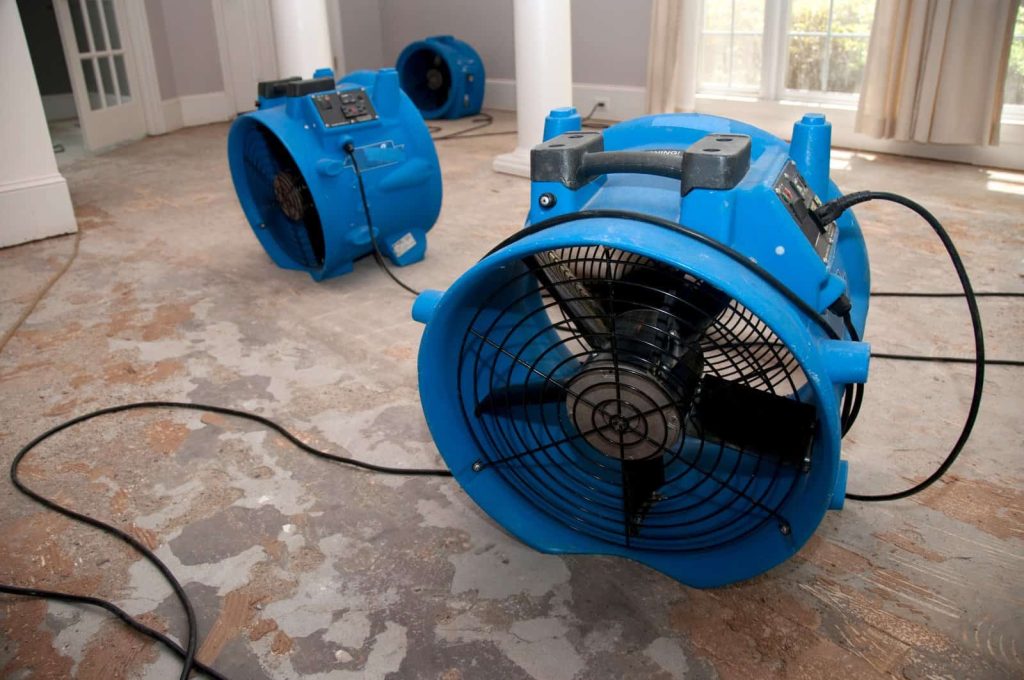
Drying equipment runs until the structure returns to safe moisture levels. This is one of the biggest cost components. Homes in Anaheim sometimes require extended drying periods due to humidity swings, insulation type, and wall construction.
Step 4: Removing Unsalvageable Materials
When materials hold moisture internally, they must be removed. Flooring, drywall, cabinets, and insulation fall into this category. Removal adds labor and disposal fees to the total.
Step 5: Cleaning and Sanitizing
Contaminated or grey water events require antimicrobial treatments to prevent bacterial growth. Black water requires far more aggressive cleaning and disposal.
Step 6: Repairs and Reconstruction
Any part of the home that needed demolition must be restored. This could mean baseboard replacement, drywall repair, texture matching, painting, or flooring installation.
Typical Price Ranges for Anaheim, CA Homes
Costs in Anaheim often follow general patterns based on the scale of the event.
Minor, contained incident: $900–$2,500
Single-room moderate damage: $2,500–$6,000
Multi-room or structural saturation: $5,000–$12,000
Category 3 contamination or storm-related flooding: $8,000–$20,000+
Homes with vintage features, plaster walls, custom cabinetry, or premium flooring often fall toward the higher end.
FAQs About Water Damage Restoration Costs
Why do estimates vary so much between companies?
Different companies handle demolition, drying, and reconstruction differently. Pricing depends on equipment used, labor rates, and whether reconstruction is included.
Is every part of the cost itemized?
Yes. Every piece of equipment, every labor action, and every demolition or repair line should appear clearly on the estimate.
Does insurance cover all restoration costs?
Insurance may cover sudden water damage but often excludes long-term leaks or issues caused by neglect. Coverage varies by policy.
Is reconstruction priced separately from the cleanup?
Often, yes. Mitigation (drying and cleanup) and reconstruction are usually separate phases with separate charges.
What raises the price the fastest?
Category 3 water, large areas of soaked drywall, prolonged exposure, mold, and flooring removal typically increase costs the most.
Conclusion
Water damage restoration costs don’t follow a single formula because the damage itself never behaves the same way twice. The materials affected, the speed of response, and the condition of the water all shape the final price. When homeowners understand why pricing varies, they’re better prepared to make informed decisions and respond quickly.
For homeowners in Anaheim, CA who want clear explanations and fast, reliable service, Green Restoration Solutions provides water damage restoration built around safety, transparency, and expert workmanship.

Our Services
HelpFul Links
Contact Information
Phone:
Address:
760 N Euclid St #301 Anaheim, CA 92801
Business Hours:
24/7 Emergency Availability
Service area
© 2025 All Rights Reserved | Green Restoration Solutions